This guide is for diamond painters who have the basic kit and want to know which accessories are worth buying. You will learn what each tool does, which ones fix real problems like spilled drills, static and crooked rows, and how to build a setup that matches your budget. Everything here comes from the small frustrations that slow a project down.
Browse tools, storage and frames for every project, with free worldwide shipping on every order.
Shop diamond painting supplies- What your kit already includes
- Workspace basics
- Drill control and placement
- Protecting the adhesive
- Pen care and wax
- Trays and sorting
- Storage for drills and canvases
- Static and dust control
- Taking your project on the road
- Finishing, sealing and framing
- Which accessory fixes which problem
- Accessory comparison
- Frequently asked questions
- Keep reading
What your kit already includes
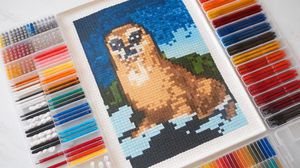
Before buying anything, check what is in the box. Each of our kits comes with the canvas, pre-sorted drills with spares, 2 drill trays, tweezers, 2 diamond painting pens, a 3-piece multi-placer, 2 pots of wax and instructions. That covers the basics for a first project.
Accessories are for the moments the basics do not handle well: a table that is too small, drills that spill, a long project you need to pause, or a finished piece you want to display.

Workspace basics
The surface you work on affects your focus more than most people expect.
- A desk or silicone mat. It stops drills from skittering off the edge and wipes clean.
- A light pad. An A4 or A3 pad lights the chart from behind and helps on darker canvases. Choose a size close to your usual canvas.
- A tilted stand or riser. It brings the canvas closer and eases your neck. Our posture guide has more.
If you want one purchase that covers the essentials, start with this tool set:


Drill control and placement
Filling a large sky one drill at a time is slow. The right tools make it faster and straighter.
- Multi-placer. Picks up several drills at once for big color blocks. Ours is included in every kit.
- Ruler or alignment tool. Keeps rows straight and helps you check columns.
- Scraper or straightener. Nudges crooked drills into line without lifting them.
- Extra pens. A spare pen with a comfortable grip is worth having for long sessions.

Use the single pen for detail and the multi-placer for open areas. Switching between them is faster than it sounds.
Protecting the adhesive
If dust or lint settles on the glue, drills stop sticking. Every canvas has a clear film over the glue, so peel back only the section you are working on.
- Cover exposed areas with the film or a sheet of parchment paper during breaks.
- Use washi tape along the edges to keep lint out.
- Store unfinished canvases flat, away from damp rooms.
- Keep a few spare glue dots or a pack of glue on hand for drills that lift later.
Pen care and wax
Most pen trouble comes from the wax. When the pen starts dropping drills or leaves tiny strings on the canvas, the wax is either used up or full of residue.
- Reload the wax when the pen stops picking up drills cleanly.
- Clear the tip if hardened residue builds up inside it.
- Keep a spare pen so you can swap tips without stopping.
- Cap the pen between sessions to keep the tip clean.
Trays and sorting
A tray that tips is a bad evening. Look for trays with a lip that holds drills in, and pour only a small amount at a time. A tray lid or a small funnel makes returning drills to their bags easier. For tight clumps of drills, a gentle tap or shake lines them up.

Storage for drills and canvases
Spilled bags are the quickest way to lose a whole weekend sorting. Good storage fixes that.
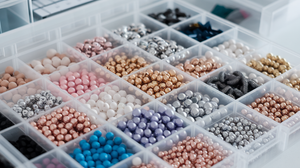
- Keep drills in their bags or small bottles and label each with its symbol or color number.
- Use a box with compartments for tools, pens and wax so nothing wanders off.
- Keep a simple list of what is left of each color so you can spot a shortage early.
- Store canvases flat or rolled loosely in a tube, and avoid sharp folds.

The same system helps with leftovers. See what you can do with extra diamonds for ideas.
Static and dust control
Static makes drills jump off the pen and cling to your fingers. A few small fixes help:
- Rub a dryer sheet lightly over trays, not over the canvas.
- Keep a lint roller within reach to lift hair and fibers from the edges.
- Work away from fans and dry air, and keep a damp cloth nearby for your hands.
Our static cling guide goes deeper.
Taking your project on the road
A small case that holds trays upright, a project tube or folder for the canvas, and a spare pot of wax is all you need. Pack a funnel too, since it rescues escaped drills fast. Close each tray before you move, and never travel with the film peeled back.
On a train or in a car, a firm board or a hardback book on your lap gives you a steady surface. Work on one small section at a time, and cover the rest. If you travel often, keep a ready-packed pouch with a pen, a pot of wax, tweezers and a tray so you can start working the moment you sit down. Check that your drills are sealed in their bags before you zip the case, since a single open bag can ruin a whole trip.
Finishing, sealing and framing
When the last drill is down, press the whole surface with a roller or a flat book so everything sits level. If you want a sealer, test it on a spare drill first. Then choose a frame that leaves a small gap so glass does not rub the drills.

Read how to seal and frame your diamond painting for the full steps.
Which accessory fixes which problem
If you are not sure what to buy, start from the problem rather than the product.
- Drills keep popping off. Press with a roller, then add a small dot of glue under stubborn drills. A glue pack is a cheap fix.
- Rows look wavy. Use a ruler as a guide and a scraper to nudge drills straight. See our troubleshooting guide.
- The canvas has wrinkles. Our guide to removing creases explains how to flatten it before you start.
- Wrist or neck ache. A riser, a comfortable pen and regular breaks help.
- You keep losing small tools. A compartment box keeps pens, wax and tweezers together.
Accessory comparison
| Accessory | Solves | Priority |
|---|---|---|
| Light pad | Hard-to-read charts, tired eyes | High for dark canvases |
| Extra pens and tools kit | Worn tips, sharing with family | High |
| Storage box | Spills and lost tools | High |
| Ruler and scraper | Crooked rows | Medium |
| Glue pack | Lifted or loose drills | Medium |
| Frame | Display and edge protection | When finished |
Buying a few things at once? Add 2 kits to your order and save 10%, or 3 kits for 15%, applied at checkout.
Frequently asked questions
What accessories do I need to start diamond painting?
Our kits already include the canvas, drills, 2 trays, tweezers, 2 pens, a 3-piece multi-placer and 2 pots of wax. Most beginners only add a storage box and a light pad at first.
Do I need a light pad?
It is optional. A light pad helps on darker canvases and in dim rooms, but plenty of people work comfortably under a good desk lamp.
How do I stop drills from spilling?
Pour small amounts into the tray, keep the spares in labeled bags or a compartment box, and use a mat under your work area.
What can I use to fix drills that fall off?
Press them down with a pen first. If they keep lifting, add a tiny dot of glue and let it set before pressing.
Do I need a sealer?
It is optional. A sealer adds a protective layer, but test it on a spare drill first and let it cure fully before framing.
Start with the right gear
You do not need everything on this list. Pick the tools that fix the problems you actually have, and add a frame when the piece is done.
Find your next kit and the tools to go with it, shipped free worldwide.
Shop all diamond painting kits