You have placed the last drill, and now the question is how to keep the piece looking sharp. This guide is for anyone finishing a diamond painting who wants to seal it, frame it and hang it with confidence. You will get a simple list of what to buy, the sealing steps in order, three ways to apply sealant, and a clear path to framing your canvas on stretcher bars.
Every kit ships free worldwide with a velvet canvas, AB drills and all the tools.
Shop diamond painting kitsWhy seal a diamond painting
Sealing is the last step of the painting itself. A thin layer of sealer holds the drills in place and adds a little extra shine. It matters most if you plan to hang the piece on a wall without glass, because loose drills tend to drift over time.

Sealing is optional for a piece that goes behind glass, but most makers do it anyway for peace of mind. If you are seeing drills pop off before you even start, our guide to common mistakes and how to fix them covers that.
What you need
Gather everything first so you can work without stopping:
- A sealer: glue, spray, or gloss decoupage medium.
- A soft paintbrush for liquid sealer.
- A roller to press the drills flat.
- A clean cloth or a soft toothbrush.
- Tweezers for fixing stray drills.


Seal or skip? A quick way to decide
- Hanging without glass: seal it. Drills stay put and the surface resists dust.
- Behind glass or in a closed frame: sealing is optional.
- Gifting the piece: seal it, so it survives postage and handling.
- Planning to store it rolled: do not roll a sealed piece. Keep it flat.

Prepare the canvas
Do these three things before any sealer touches the painting.

- Roll out air bubbles. Run a roller over the surface to press the drills down evenly and flatten the canvas.
- Wipe away wax. Excess wax between the drills dulls the finish. Use a clean cloth or a soft toothbrush to lift it out of the gaps.
- Fix strays. Use tweezers to straighten any crooked drill or fill a gap with a spare.

Apply the sealer
Pick the method that suits you and your space. Always read the label of the product you choose, and wear a mask when spraying. Dedicated sealer is made for the job, while craft decoupage gives similar results at a lower cost.
| Sealer type | How to apply | Best for |
|---|---|---|
| Glue or liquid | Brush a thin, even layer across the surface and let it dry flat | Small to medium pieces and full control |
| Spray | Hold the can a few inches away and mist the whole painting in light passes | Large canvases and quick coverage |
| Decoupage gloss | Brush on a thin coat and add a second after the first dries | A glossy finish |
Work in thin layers. A thick coat can cloud the drills. Test the sealer on a small corner first, so you can see how it looks once dry. Brush in one direction and avoid pooling in the gaps between drills. Let the painting dry fully, flat and out of the sun, before you lift it. Good airflow helps, and a spray is best used outdoors or near an open window.
Mistakes to avoid when sealing:
- Sealing over dust or crumbs of wax, which locks them in permanently.
- Using a thick coat, which can pool between drills and look cloudy.
- Moving the painting before it is dry, which can shift drills.
- Rushing the second coat. Wait until the first one is dry to the touch.
Why frame it
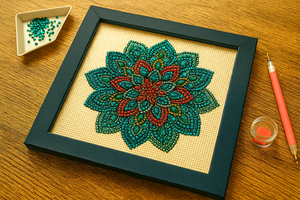
A frame turns a finished canvas into wall art. It keeps the edges straight, protects the surface from dust and gives the piece a clean, finished look. Framing also makes cleaning easier, because dust sits on the frame instead of settling into the gaps. Many people frame their first painting and then plan a gallery wall for the rest.

How to frame on stretcher bars
Wooden stretcher bars form a box that holds the canvas tight. You will need the bars, a pen or marker, scissors, and U-shaped nails. Children should have an adult help with the cutting and nailing.
- Define the ends. Lay the bars along your canvas and mark the length on the wood. Trim any extra and check that bar and canvas edges line up.
- Fix the wood. Turn the painting face down on a flat surface. Peel any adhesive tape and place the bars in position.
- Clamp the bars. Make sure the canvas sits fully inside the wood. If one side looks off, press gently to realign.
- Nail the corners. Drive a nail into each corner for stability.
- Add the backing. Place cardboard on the back for a firm, neat finish.
Match the bar length to the painting size, and cut only what you need. If you plan to hang the piece, add a hanging wire or a sawtooth hanger to the back before it goes on the wall. Keep it out of direct sunlight, which can fade colors over many months. Not sure which size to pick? Measure the canvas, then choose bars that match.


Looking for your next project? Buy 2 kits and save 10%, or buy 3 and save 15%, applied at checkout.
Shop best sellersFrequently asked questions
Do I need to seal a diamond painting?
It is not required, but it is a good idea if you will hang it without glass. Sealing keeps the drills in place and adds shine.
What can I use to seal a diamond painting?
Most people use a dedicated sealer, a spray, or a clear gloss decoupage medium. Apply it in thin layers.
Should I roll the painting before sealing?
Yes. A roller presses drills flat and removes air bubbles, which makes for a smoother, more even finish.
How long does sealer take to dry?
Dry time depends on the product and the room. Let it dry completely, flat and away from sunlight, before you move or frame the piece.
Can I frame without stretcher bars?
Yes. You can also use a standard picture frame or a ready-made option. Stretcher bars are popular because they keep the canvas tight.
Sealing and framing take an evening, and they are what make a finished piece look professional. Once it is on the wall, you will want a new one to start.
Choose your next design and enjoy free worldwide shipping with tracking.
Shop all kits