This guide is for anyone who has peeled the wrong film, spilled a tray of drills or sealed a canvas with dust still on it. Every mistake below is common, and every one has a fix. You will learn what causes each problem, how to repair it, and which small tools stop it from happening again, so your next kit goes smoothly from the first drill to the last.
Every kit ships free worldwide with a velvet canvas, AB drills and all the tools you need.
Shop diamond painting kitsPeeling off the whole protective film
Removing all of the film at once is tempting, but it leaves the glue exposed to dust, hair and skin oils. The glue also dries out and loses grip. Peel back one section at a time and keep the rest covered until you reach it.

How to fix it: lay the film back over the bare area and hold it with tape. Work from one corner, and press any loose drill back into the glue. If a patch has lost its stick, a little diamond painting glue under the drill will hold it.
Spilled drills
Trays get knocked over, bags tear and pets love a jingle. When it happens, do not panic. Most drills can be saved.
- Vacuum: use the hose attachment and go over the spot several times. Put a stocking over the nozzle first to catch the drills.
- Whisk broom and dustpan: sweep slowly so nothing bounces away.
- Lint roller or tape: press sticky side down on the floor, then peel the drills off. Keep it away from the canvas.

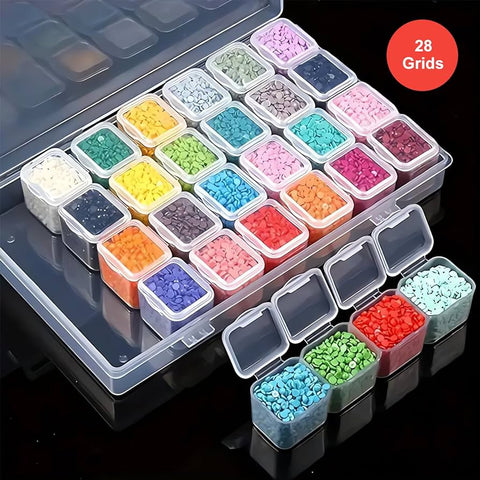
Prevention is easier, and it takes only a minute of setup. Lay a towel or a tray under your work area so rolling drills stop before they reach the floor, and close each bag as soon as you have poured what you need. Work over a tray or towel, and keep spare drills sealed in labeled bags. A proper organizer helps a lot here.


Liquid on the canvas
A knocked-over cup is the scariest accident, but you have a few minutes to act. Blot the spill with a clean, dry cloth and do not rub, because rubbing spreads it. You can also tip the canvas to let the liquid run off.

Once the liquid is gone, brush away any dried residue with a soft dry brush. For a stubborn mark, dab with a barely damp cloth and a little distilled water. Let the canvas dry flat, and use a hairdryer on low if the spill was small. Keep drinks on a separate table from now on.
Sealing over dust
Sealing protects a finished piece, but it also locks in whatever is on the surface. Wipe the painting with a clean, dry cloth or a soft brush before you seal it. Our guide to sealing and framing a diamond painting walks through the full process.

How to fix sealed-in dust: lay the painting flat in good light. Dampen a lint-free cloth with distilled water and wipe gently, taking care not to lift any drills. Use a soft toothbrush on stubborn spots, then let it dry fully before touching it. If that does not work, a sealant remover from a hardware store may help. Follow the label and test on a corner first.
Wrinkles in the canvas
Canvases get creases from folding or from sitting rolled tightly in a parcel. They are fixable. Creases from shipping are the most common cause, and they do not harm the drills or the glue. Our full guide on removing wrinkles and creases covers each method in depth. The short version:

| Method | How to do it | Watch out for |
|---|---|---|
| Ironing | Mist the back lightly, cover with a thin cotton cloth and press on low heat for about 30 seconds | Never iron the drills or the film side directly |
| Steaming | Hold a steamer near the wrinkle with a pressing cloth between | Do not steam too close or for too long |
| Hairdryer | Hold about 6 inches away on low and smooth with your hand | Keep it moving so the glue does not overheat |
A wooden frame with the canvas stretched flat also pulls out small creases over time. See our wooden frames if you plan to display the piece.
Mixed-up drills
Two close shades, such as two blues or two greys, are the usual culprits. Poured into one tray, they make a frustrating mess. The easiest cure is to never open more than one bag at a time.
- Use separate containers: small jars or a drill box keep each color apart.
- Label them: tape or stickers with the symbol on the canvas save time.
- Take a break: if symbols start to blur together, rest your eyes and come back fresh.
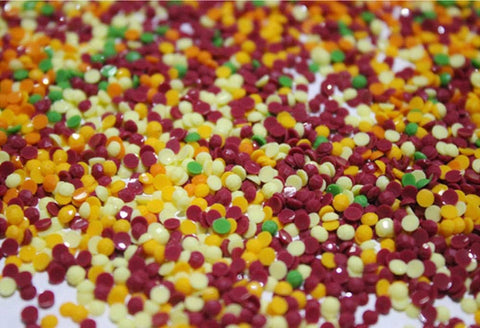
How to fix it: pour the mix onto a flat tray, then lift drills out by color with tweezers or a pen. A scraper tool helps line them up. Return each color to its own bag before you carry on.
Tools that prevent mistakes
Most of these problems come down to loose drills and sticky glue. A small set of tools makes them rare. Your kit already includes tweezers, two pens, a 3-piece multi-placer, two pots of wax and two trays. If you want to go further, an anti-stick ruler keeps your hands off the glue and a storage box keeps colors apart.


Ready for a smoother start? Buy 2 kits and save 10%, or buy 3 and save 15%, applied at checkout.
Browse tools and suppliesFrequently asked questions
What is the most common diamond painting mistake?
Peeling all of the protective film off at once. The glue picks up dust and loses grip, so peel one section at a time.
How do I pick up spilled drills?
Use a vacuum with a stocking over the nozzle, a whisk broom, or a lint roller. Keep any tape away from the canvas itself.
Can I fix a canvas that got wet?
Blot straight away with a clean dry cloth, do not rub, and let it dry flat. A hairdryer on low helps with small spills.
How do I stop drills from mixing?
Open one bag at a time and store each color in its own labeled container.
Do I need to clean my painting before sealing?
Yes. Wipe it with a clean dry cloth or a soft brush first, because sealant traps any dust left on the surface.
Mistakes are part of learning, and none of these is the end of a project. Start your next piece with the right setup and enjoy the finish.
Pick your next design and get free worldwide shipping with tracking.
Shop all kits